Do you need an activated carbon HVAC filter? Only if your problem is smell or fumes. A carbon filter removes odours, volatile organic compounds (VOCs) and nuisance fumes by trapping gas molecules in the pores of the carbon. It is not a replacement for particle filtration, so if your issue is dust, pollen or lint, a G4 or F grade particle filter is the right fix. Carbon wears out by saturating rather than clogging, so the clearest sign it needs replacing is the smell coming back.
The complaint usually arrives as an email. Staff on the second floor can smell the kitchen next door, or the office beside the spray shop smells of solvent by mid afternoon, or tenants say the air con “smells like the carpark”. Someone asks for a better filter, and the existing particle filter gets swapped for a finer one. The smell stays.
That happens because smell is a gas, and a particle filter is built to catch solids. Activated carbon is the tool for gases. Knowing which problem you have is most of the decision.
What Does an Activated Carbon HVAC Filter Actually Do?
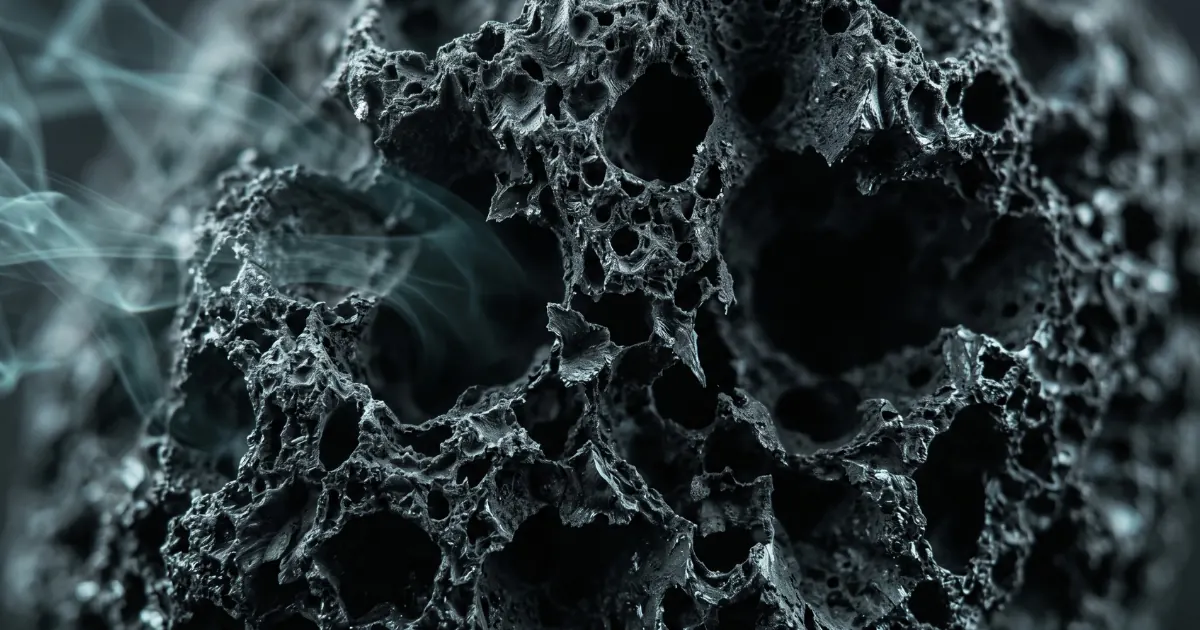
Activated carbon works by adsorption. The carbon is treated to create a vast network of microscopic pores, which gives a small amount of material an enormous internal surface area. As air passes through, odour and VOC molecules stick to those pore surfaces and are held there. AeroFlow Filters describes its carbon filter as working like an odour sponge, and that is a fair way to picture it.
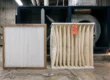
The AeroFlow Filters activated carbon pre pleat filter combines polyester synthetic fibre media with activated carbon, using a 100 percent activated carbon add-on by weight. It is designed for fast, easy remediation of minor odour problems in commercial and industrial buildings, with low resistance to airflow.
What Carbon Filters Remove, and What They Don’t
Carbon is very good at some jobs and the wrong tool for others. Being clear about the difference saves money and stops the smell coming back.
Carbon filters are good at:
- Cooking odours drifting in from nearby commercial kitchens
- Solvent and paint smells from neighbouring spray shops or workshops
- Vehicle exhaust smell drawn into an air handling unit (AHU) from a busy road or loading dock
- General VOCs from cleaning products, adhesives and new fit outs
- Musty or stale odours in recirculated air
Carbon filters are not designed for:
- Dust, pollen, lint and other particles, which need a particle filter
- Very light gases such as carbon monoxide, which carbon does not hold well
- Heavy, continuous fume loads from a process, which need a dedicated extraction or deep bed carbon system
- The source of the smell itself, which still needs fixing if it is a leak, a blocked drain or a failed seal
If the problem is a safety issue, such as exhaust gases entering an occupied space, treat it as a ventilation fault first. A filter masks a symptom. It does not make the air safe.
Carbon Filter or Not? A Quick Decision Table
| What you are dealing with | Do you need carbon? | What to use |
| Smells from a nearby kitchen, workshop or spray shop | Yes | Activated carbon pre pleat in the filter bank |
| Traffic or loading dock fumes drawn into the AHU | Yes | Carbon stage, plus check the outside air intake position |
| Solvent or chemical smell from a new fit out | Yes, for the off gassing period | Carbon stage, replaced once odour clears |
| Visible dust on vents and desks | No | G4 or F grade particle filter |
| Pollen and hay fever complaints | No | F grade particle filter |
| Both smell and dust | Yes, alongside a particle stage | Particle filter upstream, carbon stage after it |
Does a Carbon Filter Replace Your Existing Filter or Sit Alongside It?
This is the question most buyers get wrong, and the answer depends on what your filter bank already does.
A carbon pre pleat is a pleated panel filter, so physically it fits the same kind of slot as a standard pre pleat. In a simple system with one pre filter slot, swapping the standard pre pleat for a carbon version adds odour control without changing the housing. In a system that relies on a finer particle stage downstream, such as an F7 bag filter, the carbon filter goes in addition to that stage, never instead of it.
Where there is room for both, place a coarse particle filter upstream of the carbon. Dust that reaches the carbon coats the pore surfaces and shortens its working life, so a G4 stage in front of it protects your investment. If you are not sure what grade a G4 is or where it sits, our guide to what a G4 filter is covers it in plain terms.
Will a Carbon Filter Choke Airflow in an Older Unit?
It is a reasonable worry. A filter with more resistance makes the fan work harder, which can reduce airflow in older units with little spare capacity.
The AeroFlow Filters activated carbon pre pleat is designed for low resistance, which makes it suited to retrofitting into existing systems. Match the filter depth to your housing rather than going deeper than the frame allows, and keep the upstream particle filter changed on time. A loaded particle filter in front of a carbon stage adds resistance the fan has to fight, and that is often what gets blamed on the carbon.
Why the Smell Comes Back: Saturation, Not Clogging
If you have fitted a carbon filter before and the smell returned within weeks, the filter probably did exactly what it was built to do. It filled up.
Particle filters clog. They load with dust, resistance climbs and you can see the dirt. Carbon filters saturate. Once the pores are full of odour molecules there is nowhere left for new ones to go, and the smell passes straight through. A saturated carbon filter can look perfectly clean, which is why it catches people out.
How fast that happens depends on how strong the odour is, how many hours the system runs, how humid the air is, and how much dust reaches the carbon. A light, occasional kitchen smell might take months to saturate a filter. A strong, constant solvent smell can do it in weeks. Carbon pre pleats are built for minor odour problems, so a fast return of the smell is also a sign the load may need a heavier duty solution.
How Often Do Carbon Filters Need Replacing?
There is no single fixed interval that suits every building, so judge it by these practical signs:
- The odour is returning. This is the clearest signal and the one to act on first.
- Complaints follow a pattern. If smells return after a set number of weeks each time, that is your interval. Schedule the change just before it.
- The particle stage is overdue. If dust has reached the carbon, it will saturate sooner, so check both stages together.
- The source has changed. A new tenant, a new kitchen or more traffic means a heavier load and a shorter life.
Carbon filters cannot be washed or reactivated on site, so replacement is the only fix once they are saturated.
Where Australian Buildings Use Carbon Filters
Carbon stages turn up wherever odour sources sit close to occupied space. In Australian commercial property that usually means offices and medical suites above or beside food courts and restaurants, light industrial units sharing walls with spray shops or workshops, buildings whose outside air intakes face busy arterial roads, and childcare or aged care facilities where odour complaints escalate quickly. In each case the particle filtration is often fine. The problem is gas, and carbon is the stage that is missing.
Getting the Right Carbon Filter for Your System
The fastest route to a fix is knowing your filter sizes and what is already in the bank. Check the label or measure the existing filters, note how many stages the system has, and describe the smell and where it seems to come from. AeroFlow Filters supplies activated carbon pre pleat HVAC filters alongside the full HVAC filter range, with daily courier services to all Australian states.
Call to action: Shop activated carbon pre pleat filters, or send us your filter sizes for a quick size check. Call 1800 998 876 or email sales@aeroflowfilters.com.
Frequently Asked Questions
What does a carbon HVAC filter remove?
A carbon HVAC filter removes odours, VOCs and nuisance fumes by adsorption, trapping gas molecules in the microscopic pores of activated carbon. Typical targets are cooking smells, solvent and paint odours, vehicle exhaust smell and VOCs from cleaning products or new fit outs. It is not designed to remove dust or pollen.
Can I put a carbon filter in my air conditioner?
Yes, in most commercial systems a carbon pre pleat can be fitted in a standard pre filter slot, provided the size and depth match your housing. If your system also has a finer particle filter downstream, keep it in place. The carbon filter adds odour control rather than replacing particle filtration.
Where does the carbon filter go in an AHU?
Ideally after a coarse particle filter and before or alongside any finer stage. The particle filter upstream stops dust from coating the carbon, which would shorten its life. In a single slot system the carbon pre pleat takes the pre filter position.
Is an activated carbon pre filter the same as a HEPA filter?
No. A HEPA filter is a very high efficiency particle filter and does not remove odours. An activated carbon pre filter targets gases and odours. Systems that need both use them as separate stages.
Why does my carbon filter stop working so quickly?
Because it has saturated. Once the carbon pores are full, odours pass straight through, even though the filter may look clean. Strong odour loads, long running hours, high humidity and dust reaching the carbon all shorten its life.
How do I know when to replace a carbon filter?
Replace it when the odour returns. Track how many weeks that takes and schedule changes just before that point. Check the particle filter at the same time, since an overdue particle stage lets dust shorten the carbon’s life.