One of the most common questions spray booth operators ask is whether fibreglass or synthetic media is the better choice. The honest answer is that neither is universally better, because the right media depends on the job each filter position has to do. Conflicting supplier claims often make this harder than it needs to be, with one side talking up fibreglass and another talking up synthetic.
This guide compares the two media types fairly so you can match the filter to the application rather than the marketing. AeroFlow Filters stocks both, so our aim here is to help you choose correctly rather than push the more expensive option.
Fibreglass media at a glance
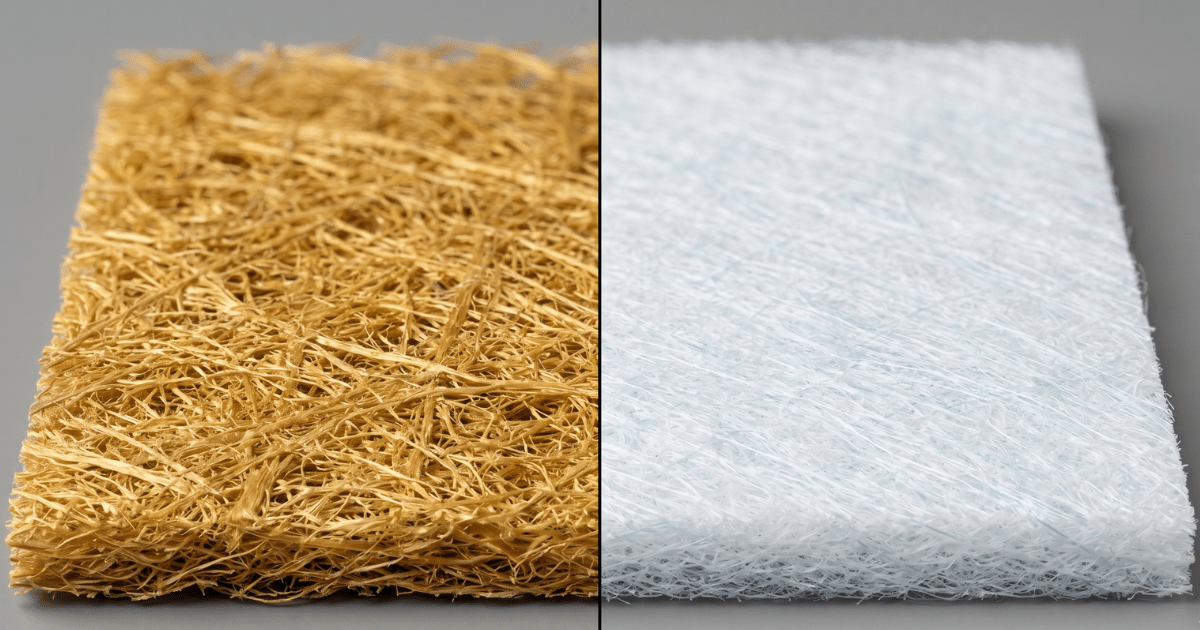
Fibreglass media is made from spun glass fibres formed into a progressively dense pad, often with a rigid self supporting structure. It is known for high dust holding capacity, which is why it is so common in exhaust and floor positions that handle heavy overspray. The rigid form helps it hold its shape under airflow and load, resisting collapse.
Fibreglass also tolerates higher temperatures, which suits exhaust positions and demanding industrial environments. It is generally cost effective for high loading positions where capacity matters more than fine particle efficiency.
Synthetic media at a glance
Synthetic media, usually polyester, is engineered from man made fibres that can be tuned for specific particle capture. It often delivers higher efficiency on finer particles, which makes it a strong option at inlet and prefilter positions where clean incoming air protects your finish.
Synthetic media tends to offer consistent performance and can carry a graduated structure that loads evenly. It is typically lighter and can be more forgiving to handle. In the right position, synthetic media can deliver longer practical service life because it loads progressively rather than blinding at the surface.
Head to head comparison
On filtration efficiency, synthetic media often has the edge on finer particles, while fibreglass is built for capturing high volumes of heavier overspray. On dust holding capacity, both perform well, with fibreglass favoured for very heavy loads and synthetic favoured for steady fine particle duty. On structural rigidity, fibreglass is usually the stronger performer, which is why it suits floor and exhaust positions under pressure and weight.
On temperature resistance, fibreglass generally tolerates more heat, an advantage in hot exhaust streams. On cost and disposal, fibreglass is often the economical choice for high loading positions, while synthetic can justify its cost where fine particle control protects expensive finishes.
The fibreglass is always premium myth
There is a widespread belief that fibreglass is automatically the premium choice and synthetic is the budget option. That is not accurate, because each media has clear advantages in specific roles. Synthetic media frequently outperforms fibreglass at the inlet and prefilter position, where the priority is capturing fine airborne dust before it reaches the spray zone.
Choosing fibreglass everywhere simply out of habit can mean paying for capacity you do not need while missing the fine filtration you do. The smarter approach is to match the media to the position rather than assuming one type is superior across the board.
A simple recommendation matrix
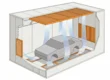
For heavy industrial overspray at the exhaust position, fibreglass is usually the right call thanks to its loading capacity and heat tolerance. For a high efficiency fine particle inlet or prefilter, synthetic media is often the better choice because of its finer capture. For floor positions that take foot traffic and equipment weight, heavy duty fibreglass is the dependable option for its rigidity and capacity.
For booths chasing the cleanest possible incoming air, a synthetic prefilter ahead of the main filtration stage works well. Many booths benefit from a mix, with synthetic at the inlet and fibreglass at the floor and exhaust.
Honest advice, not a sales pitch
The right media recommendation builds far more trust than pushing the most expensive product. Because AeroFlow Filters stocks both fibreglass and synthetic media, we have no reason to steer you toward one type when the other suits your booth better
We would rather you order the correct filter once than replace the wrong one twice. If you are facing different requirements at different positions in the same booth, that is completely normal and we can help you map it out.
Talk to the AeroFlow Filters team for a tailored recommendation, or request a quote across both media types so you can compare with confidence.