You’ve just laid down the final clear coat. The panel looks like glass. You turn around to clean your gun, look back, and there it is: dust. The finish is compromised. Now you’re looking at hours of sanding, buffing, and repainting.
It’s the most frustrating scenario in a panel shop or industrial coating facility. And nine times out of ten, the culprit is directly under your feet.
Floor filters are the unsung heroes of your operation. When they fail, or when they clog and you push them for “just one more shift,” your exhaust fans strain to pull air. That creates a bottleneck. When the air has nowhere to go, overspray bounces right back up off the floor and settles onto your wet finish.
Every clogged filter steals airflow. It’s that simple.
As Australia’s spray booth filtration specialists, we know that throwing budget media into an expensive machine is a false economy. The right spray booth floor filters are a critical mechanical barrier. They protect the quality of your finish, defend your exhaust fan motors from burning out, and keep your business compliant.
Here is exactly how to choose the right floor filter to protect your reputation and your bottom line.
How a Downdraft Spray Booth Floor Filter Actually Works
To understand why floor media fails, you have to look at the mechanics of a downdraft booth.
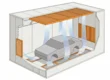
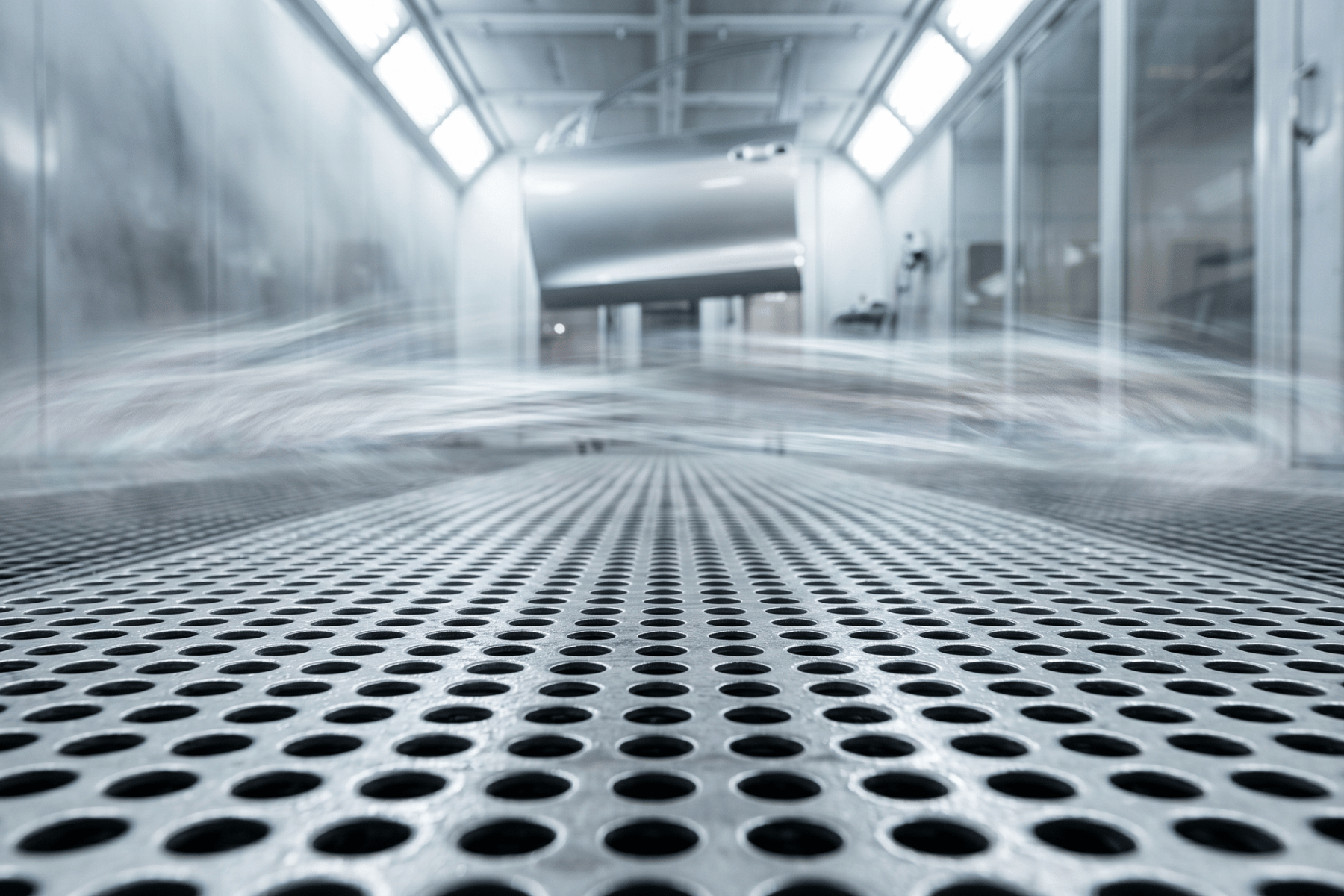
Clean, temperature-controlled air enters through the ceiling filters. This creates a downward curtain of air that pushes paint particulates and volatile organic compounds (VOCs) toward the floor grids. Your downdraft spray booth floor filter sits beneath those grids. Its job is to catch the sticky, heavy overspray before the air is pulled into the exhaust pit and fired out the stack.
But not all media handles this the same way. The performance comes down to three technical variables: paint holding capacity, micron ratings, and airflow resistance (measured as a Pascal pressure drop, or Pa).
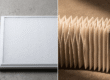
- Progressive Density: Quality floor filters are built with progressive density. The fibers are open and loosely packed at the top to catch larger paint droplets, and tightly woven at the bottom to trap fine particulates. This prevents the filter from “face-loading”—where the top layer seals over like a piece of cardboard while the inside remains clean.
- Fiberglass vs. Synthetic: Spun fiberglass is the industry standard for solvent-based paints. It offers a massive paint-holding capacity (often up to 3.5 kg/m²) while maintaining low initial airflow resistance. Synthetic polyester media is increasingly used for water-based paints, offering excellent durability and structural integrity even when wet.
- Airflow Resistance (Pa Drop): A fresh fiberglass floor filter might start with an initial resistance of just 15 Pa. As it fills with paint, that resistance climbs. Once it hits the recommended final resistance (usually around 250 Pa), the exhaust fan has to work exponentially harder to pull the same volume of air.
If you ignore that final pressure drop, the motor draws more amps, runs hot, and eventually burns out.
Overcoming the Objections: Fit, Quality, and Alternatives
Facilities managers and workshop owners ask us the same three questions when mapping out their maintenance schedules. We believe in answering them directly.
Will it fit my specific or older machine?
Booths come in all shapes, sizes, and pit configurations. And here is a frustrating reality: original equipment manufacturers (OEMs) routinely stop stocking parts for legacy machines once a new model rolls out.
If you have a 15-year-old booth that still runs beautifully, finding pre-cut media can be a nightmare. Stuffing a filter that is slightly too small into the pit is a disaster waiting to happen. Even a 10mm gap will cause “bypass,” where overspray takes the path of least resistance, entirely avoiding the filter and coating your exhaust fan blades in thick paint.
We solve this by supplying custom-sized filters cut to your exact pit dimensions. You get a perfect, tight seal and zero bypass, regardless of your booth’s make, model, or age.
OEM vs. Aftermarket: Are these as good as the original manufacturer parts?
This is the big one. When a procurement manager is used to buying from major OEM benchmarks like Camfil, they hesitate to switch. They want to know if aftermarket media can handle the volume.
Look at the numbers. AeroFlow Filters media is engineered to meet or exceed original manufacturer specifications. Our heavy-duty fiberglass rolls deliver a 98.5% arrestance rate for paint particulates, mirroring the performance of the most expensive European filters on the market. We test our media rigorously for structural integrity, ensuring fibers don’t break off and get pulled into the exhaust fans.
We don’t expect you to just take our word for it. We provide transparent specifications so you can compare the data yourself.
The Hidden Cost of Low-Grade Imports
There is always a cheaper roll of filter media available online. Always. But let’s look at the actual return on investment.
Budget, cut-rate imports are typically manufactured with uniform density rather than progressive density. They face-load rapidly. You might save $50 on the purchase price of the roll. But if that filter face-loads halfway through a busy Tuesday, your airflow drops instantly.
Suddenly, your team is dealing with dust inclusions. A $50 saving on a filter directly causes a $500 rework job. If the bypass is bad enough, you’ll be paying a technician $5,000 to replace a seized exhaust fan motor. It is a terrible business choice. Quality filtration is an insurance policy for your machinery and your labor hours.
Compliance, Safety, and Australian Standards
For industrial coaters, marine procurement, and facilities managers handling healthcare compliance, spray booth exhaust filters are about risk management.
Australian legislation is incredibly strict regarding what you can and cannot exhaust into the atmosphere. The EPA and local councils monitor VOC emissions and paint particulate release. Operating a booth with compromised, bypassed, or heavily clogged floor filters doesn’t just ruin your paint jobs, it exposes your business to severe non-compliance fines.
More importantly, it is a workplace health and safety issue.
Industrial coatings contain isocyanates and heavy VOCs. If your downdraft system isn’t pulling air efficiently because the floor filters are choked, those chemicals linger in the breathing zone of the operator. Even with a supplied-air respirator, lingering fumes create a hazardous environment for the rest of the workshop when the booth doors open.
By installing high-capacity media and sticking to a strict replacement schedule, you guarantee safer, cleaner environments for your staff. You meet the requirements of AS/NZS 4114 (Spray painting booths, designated spray painting areas and paint mixing rooms), and you completely eliminate the risk of a local council shutting your operation down due to environmental contamination.
Why Partner with AeroFlow Filters?
Paint booths only make money when they are spraying. Every hour spent waiting for an overseas shipment to clear customs, or waiting for an unreturned phone call from a supplier, is lost revenue.
You need a reliable partner.
- Reduce Downtime: We map out routine maintenance schedules with our clients. We look at your spray volume, calculate your Pa drops, and tell you exactly how many weeks a filter will last in your specific shop. You change the filter before the airflow drops, completely eliminating unscheduled downtime.
- Fast, Local Supply: AeroFlow Filters holds massive stock across Australia. We don’t rely on long, fragile international supply chains to fulfill your order. If your booth is running heavy and you need a fresh roll of media immediately, we have it on the shelf and ready to ship.
- Consultative Approach: We aren’t here to just shift units. If you are experiencing weird airflow turbulence, or your current filters are degrading too fast, we will troubleshoot the system with you. We know the mechanics of the machinery, not just the dimensions of the filter.
Protect Your Airflow Today
Do not wait until your exhaust fans are screaming and your clear coats are ruined before you look at your pit.
The right downdraft spray booth floor filter guarantees your finish, protects your highly expensive mechanical fans, and keeps your entire facility compliant with Australian safety standards.
Contact AeroFlow Filters today for a fast, local supply of custom-sized filters. We have the technical specs to prove our quality, and the local inventory to keep your shop moving.