The Frontline Defence for Your Spray Booth
There is nothing quite as frustrating as watching a flawless clear coat get ruined in the final minutes. You’ve done the prep work. The mix is right. The gun is dialled in. But then a speck of dust or a heavy cloud of overspray drops right back onto the wet panel.
Now you are looking at hours of sanding, buffing, or a complete re-shoot. That is lost time, wasted materials, and a hit to your reputation.
Most of the time, the culprit isn’t the painter or the gun. It’s the extraction. Dust, overspray, and clogged filters are the quiet killers of paint shop profitability. When you push a degraded filter past its lifespan, or use the wrong media for your setup, the booth chokes. As the old saying goes: every clogged filter steals airflow.
The proven way to capture heavy, wet overspray and maintain that critical, consistent airflow is by using the right fibreglass filter media spray booth solutions. You need extraction media that actually pulls the mist away from the job and holds it, rather than just blocking up at the surface.
As your local spray booth filtration specialists, AeroFlow Filters knows exactly what happens when your exhaust system goes down. We see it every day in panel shops and industrial manufacturing across Australia. Let’s break down exactly what fibreglass media is, how it works, and why getting it right is the easiest way to protect your bottom line.
What is Fibreglass Filter Media? (The Technical Breakdown)
Look, nobody likes spending money on extraction media. It’s a consumable. But understanding the mechanics of how it actually works explains why it’s a non-negotiable part of your setup.
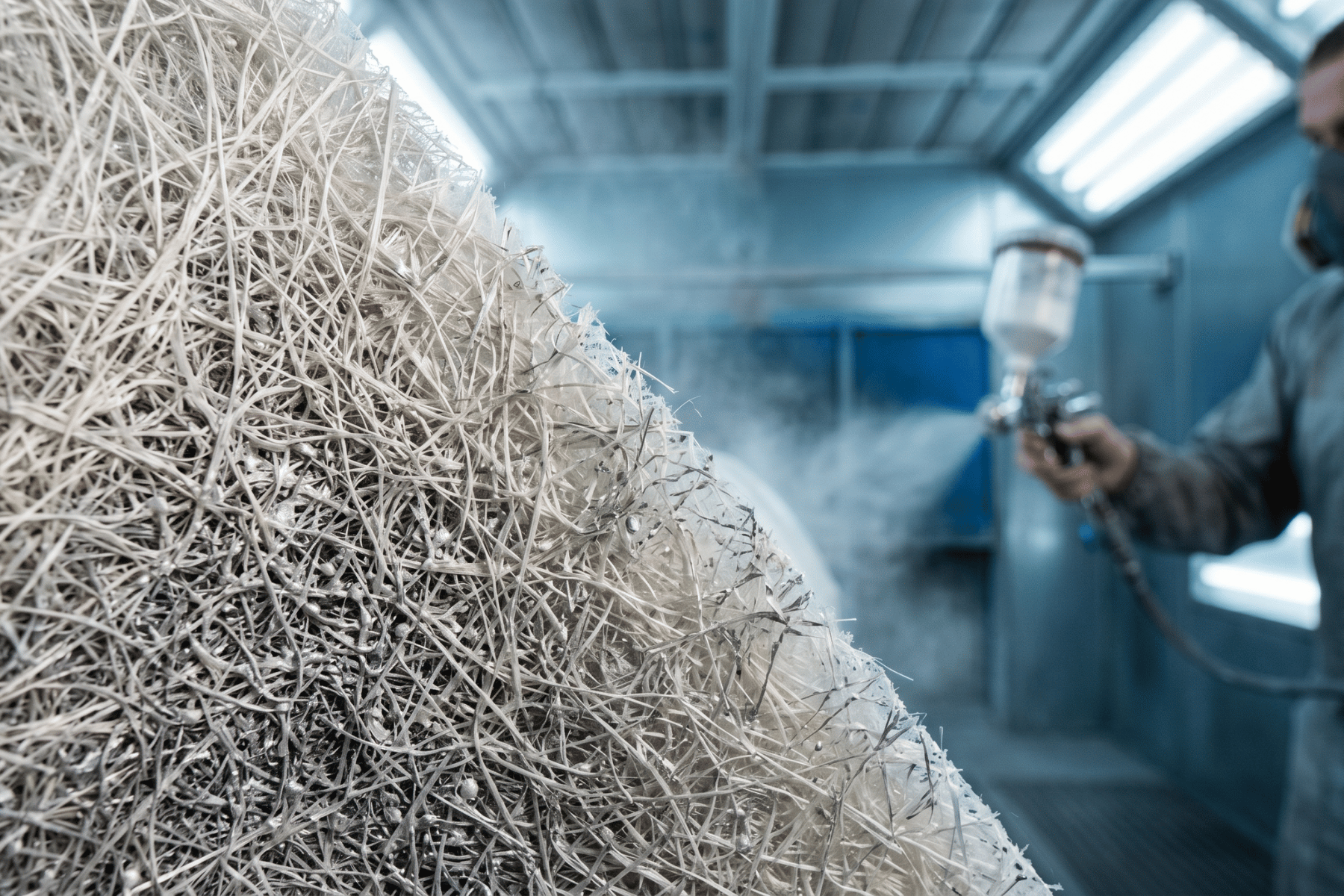
Fibreglass filter media isn’t just a woven mat. It relies on a mechanical principle called “progressive density.”
If you cut a pad open, you’ll notice the air-entry side feels relatively loose and open. As you move towards the air-exit side, the continuous glass filaments are woven much tighter. This isn’t an accident.
When heavy paint particles hit the filter, the larger droplets are caught immediately by the loose fibres on the front face. The smaller, finer particles pass through that first layer and get trapped deeper inside the tighter weave. This prevents “face-loading”—where the surface of the filter blocks up instantly while the inside remains clean. Instead, the paint particles are trapped deep within the pad, allowing air to keep flowing freely around them.
Here is what you should be looking for in the specs:
- Micron capture rate: Capable of trapping highly viscous paint mist and resins.
- Dust-holding capacity: Exceptionally high. A quality roll should hold kilograms of paint before the pressure drop forces a change.
- Airflow capacity: Rated to handle high-velocity extraction (often exceeding 2500 m³/h depending on the grade).
Primary application? This material is specifically engineered for floor and exhaust extraction. It is built to capture wet, sticky overspray from two-pack paint, clear coats, and industrial resins.
Why Proper Filtration Drives Your Bottom Line
It’s easy to look at a roll of filter media as just another line item on an invoice. But those spun glass filaments dictate how much money your spray booth actually makes.
Protecting Your Quality of Finish
Airflow inside a spray booth needs to be laminar—meaning it flows smoothly and evenly in one direction. When your exhaust filters clog, the air has nowhere to go. It hits the floor, bounces back up, and creates turbulence. That turbulence grabs dried overspray from the walls and dumps it right onto your wet panels. Clean exhaust air prevents blow-back. It keeps the overspray moving away from the job.
Minimising Bottlenecks
We’ve all seen painters pull old, crusted filters out of the floor and try to bang them against a wall to get another day out of them. It’s a false economy.
High-capacity fibreglass spray booth filters require far fewer changeouts because of that progressive density we talked about. More importantly, maintaining reliable airflow speeds up curing times. When the booth clears faster, you cycle cars through faster. The right media is an investment to reduce downtime and increase your daily output.
Compliance & Safety in Australia
Proper filtration is non-negotiable for meeting local EPA regulations. But beyond the paperwork, it’s about physical safety.
Highly flammable two-pack paint buildup is a massive fire hazard. If your filter collapses and lets sticky overspray bypass the media, it coats the blades of your extraction fan. An unbalanced, paint-coated fan motor running hot is exactly how booth fires start. Keeping the exhaust clean ensures safer, cleaner environments for your staff and protects your quarter-million-dollar equipment investment.
Case Study: Solving Rework and Airflow Issues
To show you exactly how this plays out in the real world, let’s look at a recent issue we resolved for a busy, medium-sized automotive spray booth in Victoria.
The Problem: This panel shop was pushing through high volumes but bleeding money on a 15% rework rate. Their finish was plagued by dust inclusions. Worse, the booth was shutting down mid-bake. The pressure sensors were tripping because their floor filters were face-loading within just a few days of installation. The extraction fan was working twice as hard to pull air through a brick wall of dried clear coat.
The Solution: They contacted AeroFlow Filters, and we immediately swapped out their lightweight import media for our heavy-duty fibreglass rolls. We accurately cut the pads to fit their specific floor pit dimensions to ensure zero bypass.
The Result:
- Reduced rework by 80%: The stable, laminar airflow stopped the turbulence that was dumping debris onto the cars.
- Stabilised booth pressure: The extraction fan returned to normal operating parameters.
- Doubled filter lifespan: The progressive density media lasted over two weeks between changeouts, drastically cutting their maintenance labour.
Addressing the Big Objections: Fit, Quality, and Cost
When procurement managers or shop owners call us, they usually have the exact same three questions. We prefer to address them head-on.
“Will it fit my specific or older spray booth?” Yes. Your booth might be a brand-new turnkey installation, or it might be a twenty-year-old legacy system that’s been modified three times. It doesn’t matter. We provide custom-sized filters cut precisely to your booth’s specifications. You don’t have to overlap rolls or leave gaps that let paint bypass the extraction.
“Is it as good as the original manufacturer (OEM) part?” If you pull the spec sheets, you’ll see they don’t just match; they often exceed the standard OEM pressure drop and efficiency ratings. We supply the exact same heavy-duty, continuous glass filament media used by top-tier spray booth installers across the country. You are getting industrial-grade filtration without the inflated OEM badge price.
“Is it worth the cost compared to low-cost imports?” Here is where things get interesting. You can absolutely find imported floor filters for less money. But those substandard filters use cheap resin binders that break down under high-velocity air. They compress flat under pressure, completely losing their depth-loading capability.
When they compress, they let paint straight into your exhaust fan. Now you are paying an extraction technician to scrape your ducting. Add in the thousands of dollars in paint rework, and the Total Cost of Ownership on a “cheap” filter is massive. Investing in quality media is just a fraction of the cost of re-shooting a single vehicle.
Technical Specifications
For Facilities Managers, Procurement teams, and Installers who need the hard data to sign off on a supplier change, here are the core metrics of our fibreglass media:
- Media Type: Spun continuous glass filament with thermosetting resin binder.
- Structure: Progressive density (open entry, tight exit).
- Arrestance: >90% capture efficiency for typical paint mist.
- Initial Pressure Drop: 10 – 15 Pa (depending on specific grade and velocity).
- Recommended Final Pressure Drop: 130 – 250 Pa.
- Temperature Resistance: Up to 170°C.
- Fire Rating: Non-flammable, self-extinguishing to DIN 53438 standards.
The AeroFlow Filters Difference: Local Supply, Less Waiting
When your booth pressure trips and you can’t spray, every hour costs you money. You cannot afford to wait weeks for shipping from an overseas supplier, or deal with a distributor who has left you on backorder.
We understand the urgency of commercial extraction. AeroFlow Filters guarantees fast, local supply of your exact filter requirements across Australia. We hold the stock here. We cut it here. And we ship it directly to your shop floor.
Need a filter fast? We’ve got you covered. Get custom-sized filters, shipped locally, and built to last. Contact AeroFlow Filters today to check local stock or request a quote.